




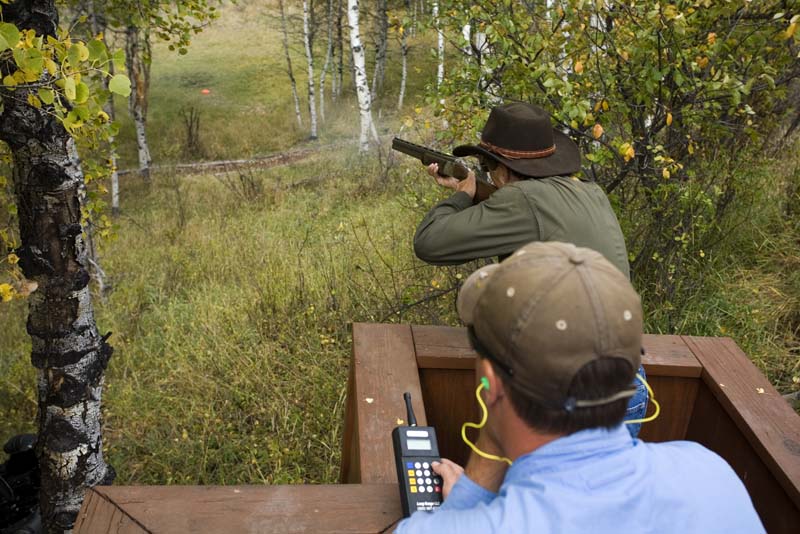
In competitive clay shooting, reaction speed isn’t just about hand-eye coordination—it’s about recognition. The best shooters don’t process each target as something entirely new. Instead, they rely on a mental library of target types, allowing them to instantly identify the presentation, anticipate the flight path, and execute the shot with confidence.
This ability to subconsciously recall past targets and react instinctively is what separates elite competitors from those who hesitate and second-guess their lead. It’s not just experience that builds this skill—it’s deliberate training, visualization, and pattern recognition.
Developing a shot library is a critical skill for competitive shooters who want to react faster, reduce mental strain, and improve consistency across varying course layouts. By understanding how top shooters memorize target types, you can train your brain to process presentations faster, recognize critical cues instantly, and shoot with greater confidence.
How Top Shooters Use a Shot Library to React Faster
A shot library is an internal catalog of target presentations, speeds, angles, and background conditions that a shooter has encountered and memorized over time. This allows an experienced competitor to quickly recognize a target’s behavior before they even mount the gun.
Gil and Vicki Ash of OSP Shooting School emphasize that top shooters don’t “see” a target for the first time when it leaves the trap— they recognize it from past experience (Ash and Ash 112). By having an internal reference for each type of presentation, a shooter doesn’t need to analyze every detail in real time. Instead, they immediately match the target to a known category and instinctively apply the correct move.
For example, if a shooter sees a quartering away target at 35 yards, their brain instantly pulls from past experiences, recalling the necessary hold point, gun speed, and break point. This mental efficiency reduces hesitation and eliminates over-analysis, which often leads to erratic movements and missed targets.
Pattern Recognition: Training the Brain to Identify Targets Instantly
The brain processes information through pattern recognition. Just as a seasoned bird hunter instinctively knows how a flushing pheasant will react, a top sporting clays shooter instantly recognizes target behavior based on visual cues such as:
- Trap placement and launch angle
- Clay color contrast against the background
- Speed and rotation of the target
- Flight path in relation to the shooter’s position
By exposing the brain to as many variations of these factors as possible, a shooter can develop a deeper, more instinctive understanding of how different targets behave.
Neuroscience research on sports reaction time suggests that athletes who repeatedly train with variations of the same movement pattern develop faster response times and greater accuracy under pressure (Beilock 163). This is why top competitors dedicate time to practicing specific target presentations in multiple environmental conditions—it conditions the brain to react without conscious thought.
The Three-Part Process for Building a Shot Library
1. Exposure: Shooting a Variety of Target Presentations
The foundation of a strong shot library is intentional exposure to diverse target presentations. Shooting the same course repeatedly does not build recognition skills—exposing yourself to different backgrounds, wind conditions, and unique target setups does.
High-level shooters seek out courses that challenge them by including:
- Deep quartering targets that change visual depth perception
- High chandelles and dropping incomers that require hold point precision
- Fast crossers that force efficient gun movement and lead calculation
For shooters looking to compete at an elite level, training should include deliberate exposure to these presentations at different distances. According to Michael Yardley, one of the UK’s most respected shotgun instructors, shooters who practice the same shot from multiple angles and distances retain it better than those who just repeat the same drill at a fixed station (Yardley 76).
2. Visualization: Mental Rehearsal of Target Presentations
Top shooters don’t just train with live fire—they mentally rehearse targets to reinforce their shot library. Visualization is a proven method used by Olympic athletes and top competitors to improve reaction speed, increase confidence, and sharpen decision-making under pressure.
Gil and Vicki Ash teach a “pre-shot visual library” exercise where shooters:
- Picture a specific target type in their mind (e.g., a right-to-left crosser at 40 yards).
- Imagine their eye movement, gun mount, and break point.
- Mentally execute the shot smoothly, feeling the barrel move naturally through the lead.
According to OSP research, shooters who incorporate visualization into training see significant improvement in reaction time and accuracy, as the brain has already “practiced” executing the shot before stepping into the stand (Ash and Ash 127).
3. Reinforcement: Reviewing Past Shots to Strengthen Memory
After every round, top shooters review their performance and mentally categorize targets into their shot library. This process ensures that each new experience is stored and reinforced for future recall.
World FITASC Champion Richard Faulds recommends shooters keep a training log where they write down:
- Target types they struggled with
- Wind and lighting conditions that affected visibility
- Specific adjustments that improved their breaks
By reviewing and mentally replaying past shots, shooters cement the experience into long-term memory, making recall faster and more automatic in future rounds.
Why a Strong Shot Library Separates Champions from the Rest
Competitive shooters at the highest level don’t just react to targets—they recognize them instantly and apply the correct move without hesitation. The development of a well-trained shot library allows for:
- Faster target acquisition and decision-making
- More consistent leads based on instinct rather than guesswork
- Reduced mental fatigue, allowing focus to remain sharp over long competitions
By training the brain to categorize, visualize, and reinforce target presentations, shooters can dramatically improve their ability to anticipate and execute shots with confidence.
The ability to “read” a clay target instantly and trust muscle memory is what separates elite shooters from those who struggle with hesitation and inconsistency. Whether training for a Sporting Clays championship, a FITASC Grand Prix, or a high-stakes Trap event, the best shooters know that success starts with the mind—and a well-built shot library is the key to faster, more consistent shooting.
References
- Ash, Gil, and Vicki Ash. Sporting Clays Consistency: You Gotta Be Out of Your Mind!. OSP Shooting School, 2019.
- Beilock, Sian. How the Body Knows Its Mind: The Surprising Power of the Physical Environment to Influence How You Think and Feel. Atria Books, 2015.
- Yardley, Michael. Positive Shooting: A Guide to Competitive Clay Shooting. Quiller Publishing, 2017.