




Turkey hunters speak of the Grand Slam with reverence. It’s the feat of harvesting all four U.S. wild turkey subspecies – Eastern, Osceola (Florida), Rio Grande, and Merriam’s – and doing it in a single spring season elevates the challenge to legendary status. Fewer than 0.1% of turkey hunters have ever accomplished a Grand Slam; in fact, just over 1,500 hunters have officially registered one with the NWTF (National Wild Turkey Federation). Achieving this in one season requires intense planning, travel savvy, and no small amount of skill and luck. This in-depth guide – packed with expert advice from biologists and veteran turkey hunters – will help you plan a single-season Grand Slam adventure. We’ll cover the recommended order of pursuit (which bird to hunt first and last, and why), prime locations and public land opportunities for each subspecies, logistical and travel tips, challenges to expect in terrain and turkey behavior, and gear recommendations (including how to protect your shotgun with a premium Negrini case).
Experienced hunters know that success favors the prepared. From the steamy swamps of Florida’s Osceola habitat to the snow-capped ridges of Merriam’s country, each leg of the Grand Slam presents unique hurdles. Let’s break down the journey subspecies by subspecies – and season by season – so you can map out a realistic game plan for your Grand Slam spring.
Order of Pursuit: From Swamps to Mountains to Home
Planning when to hunt each bird is crucial. Seasons open and peak at different times across regions, so the sequence of your hunts can make or break your single-season slam. Expert hunters generally recommend a south-to-north, early-to-late progression, starting with Florida’s Osceola turkey and ending with the widespread Eastern turkey. This approach aligns with spring turkey season dates – Southern states open as early as March, while Northern states run into late May – and it tackles the toughest logistics first.
Why start with Osceola and end with Eastern? The Osceola (found only in Florida) is often the most logistically challenging bird – and Florida’s spring season is among the nation’s earliest. “As it is often logistically the most difficult, and offers the earliest seasons, let’s start with the Osceola or Florida turkey,” advises outdoor writer and guide Bob Humphrey. By contrast, Eastern turkeys are abundant across many states and can be hunted later in spring (some Northern states even extend into early June). That makes an Eastern gobbler ideal to save for last as a contingency plan. “Last but not least is the Eastern… Don’t slack on your planning or preparation, especially if your goal is to complete your grand slam in a single season,” Humphrey cautions. In other words, even though Easterns might be in your backyard, treat that final hunt with the same diligence as the others – it could be your slam clincher.
Between those bookends, you’ll likely pursue the Rio Grande and Merriam’s turkeys in the mid-spring period (April). The exact order for these two can vary. Many hunters chase Rios in early to mid-April (as seasons in Texas, Oklahoma, and Kansas typically open by then) and then head for Merriam’s country in late April. Others flip the order based on tag draw results or weather – the key is to schedule Merriam’s no later than the latter half of April, because mountain states may still have snow early on and you’ll want to catch the tail end of their season. Both approaches can work as long as you mind the dates. The bottom line is to start early down south and finish late up north, using the staggered state seasons to your advantage. As NWTF spokesman Pete Muller notes, “Southern states may open earlier in the year… however, northern states will have seasons that run further into May”, so plan accordingly to maximize your available hunting window.
Next, let’s dive into each subspecies – their recommended locales, timing, and what to expect – following this general order of attack.
Osceola: Florida’s Exclusive Prize
Image: A strutting Osceola gobbler in Florida’s flatwoods. The Osceola (Florida wild turkey) sports darker wing feathers with less white barring than other subspecies, and long legs suited for swampy terrain.
When to Hunt: March (early season). Florida is the only place to bag a true Osceola turkey, and its spring turkey season opens as early as the first week of March in south Florida. These birds are “some of the first to come into season each spring”, making them the natural starting point for a Grand Slam quest. Aim for a mid-March hunt if possible; not only are Florida gobblers fired up early, but an Osceola hunt demands advance planning and you’ll want to get it under your belt before moving on.
Where to Hunt: Florida – and only Florida. The Osceola’s range is limited to the peninsula of Florida (north-central and southern portions of the state). That monopoly means high demand and competition for hunting spots. Unless you have private land access, you’ll likely need to either book a guided hunt or enter Florida’s public land permit lotteries. “Florida has a monopoly on the Osceola and they know it. Finding a place to hunt is tough, and finding a good place is tougher,” notes Bob Humphrey, emphasizing that most DIY hunters will need to “plan early” and often hire a guide for this leg. Indeed, many top Osceola properties are controlled by outfitters (expect to pay a premium for a guided hunt), but there are public-land opportunities for the determined.
Florida’s Wildlife Management Areas (WMAs) offer limited-entry spring turkey hunts for Osceolas. Some large WMAs require special quota permits (which must be applied for in the fall of the previous year), while a handful have walk-in (no-quota) spring turkey hunting. Do your research on Florida’s WMA system – the Florida Fish and Wildlife Conservation Commission publishes which WMAs hold Osceolas vs. Easterns. A couple of renowned public hotspots are Richloam WMA (58,000+ acres of classic cypress swamp, pine flatwoods and oak hammock habitat) and Green Swamp WMA (50,692 acres of hardwood swamp and pine flats) in central Florida. Both hold healthy Osceola populations, though hunting pressure is high and conditions can be challenging (Green Swamp, for instance, often has high water that can flood access trails). If you’re lucky enough to draw a permit for one of these large WMAs, you’ll be in the game for a public-land Osceola, but be prepared to work for it.
For those unable to secure public land, outfitters are the fallback. A guided Osceola hunt can range widely in cost, but the upside is access to managed land with birds. Be sure to check references and book early – good Florida outfitters fill their limited spring slots quickly, often months in advance.
What to Expect & Tips: Osceolas are notoriously tough turkeys. They are slightly smaller than other subspecies and often described as having a feisty, aggressive disposition, yet they can also be frustratingly elusive. Their habitat is a wet, tangled mix of palmetto flats, swamps, and pine woods – beautiful but difficult terrain. One veteran hunter aptly nicknamed the Osceola “the ghost of the Everglades” for its tendency to slip in silently. These birds inhabit an environment with plenty of cover and often won’t gobble as readily as, say, a Rio or Merriam’s. When they do sound off, the swampy acoustics can make locating them tricky. “I can, without a doubt, say the Osceola is the toughest bird to bag,” writes NWTF hunter Matthew Breuer, citing “confusing [public land] applications and areas, differing hunting hours from one WMA to the next, [and] cost of the trip” among the challenges unique to Florida. Additionally, watch for snakes and even alligators in some areas; Florida woods demand a keen eye on the ground as you move around to strike a call.
To improve your odds, scout or roost birds the evening before if possible (or have your guide do so). Osceolas often roost in cypress trees over water or swamp islands. At first light, they’ll pitch down into the nearest dry spots. Set up early, use decoys and calls judiciously (local hunters often call softer or less frequently for pressured Osceolas), and be patient. Mid-morning can be productive if hens wander off – gobblers in this habitat may quietly sneak in. Finally, respect Florida’s regulations: some WMA hunts end at 1 p.m. daily, and the state has varying rules on allowable firearms and shot sizes, so read the fine print for your specific hunt area.
By starting your Grand Slam in Florida, you tackle the most exclusive bird right off the bat. With luck, you’ll leave the Sunshine State in March with an Osceola tag filled – and a new appreciation for palmetto groves and mosquito repellent. Now the road (or flight) turns westward, where bigger but no less challenging birds await.
Rio Grande: Gobblers of the Plains
Image: Rio Grande gobblers strutting in the brushy plains of Texas. Rios often inhabit semi-open country – here, cactus-studded rangeland – and tend to gather in groups, making for exciting hunts.
When to Hunt: Early to Mid-April. The Rio Grande turkey’s core range is the south-central Plains and Southwest, where spring seasons typically open in early April (for example, Kansas and Oklahoma open in April, and Texas has staggered zones opening from late March into April). Aim to hunt Rios soon after your Florida trip – the first two to three weeks of April are prime. By late April, many Rio flocks have been pressured and toms can get tight-lipped or “henned up,” so an earlier hunt gives you a better chance while gobblers are still responsive.
Where to Hunt: Texas, Oklahoma, Kansas, Nebraska, California – Rios have a fairly wide distribution, but the classic destinations are Texas and Oklahoma, which boast strong Rio populations. Kansas and Nebraska also hold Rios (often intermixed with hybrids or other subspecies in certain areas), and even Oregon and California have huntable populations. Each of these states offers something different:
- Texas: Home to huge numbers of Rio Grande turkeys, especially in the Hill Country, South Texas brush country, and along rivers/creeks statewide. The challenge in Texas is access – much of the land is private. Public options exist (national forests in East Texas hold some Easterns/Rios; a few large WMAs and National Wildlife Refuges allow spring turkey hunts by draw), but generally, a Texas Rio hunt means either paying an outfitter or securing permission/lease on private land. The upside is Texas allows multiple birds (bag limits of 3 or 4 gobblers in many counties) and long seasons. If you can swing it, Texas can check off your Rio and offer bonus birds for the freezer.
- Oklahoma: A hidden gem for Rios. Oklahoma has a mix of public lands (Wildlife Management Areas and Walk-In Hunting Areas) and reasonable permit costs. The western and southwestern regions are Rio strongholds. Many hunters report good success on Oklahoma’s WMAs with some preseason scouting. Like Texas, Oklahoma typically allows three toms in spring (check regs by county). If you want a lower-cost DIY Rio hunt, Oklahoma should be high on the list. “Some of the best states to chase Rio Grande turkeys in are Texas and Oklahoma,” notes the Mossy Oak Pro Staff, which annually hunts Rios in these areas.
- Kansas: A great option to combine with another subspecies. Kansas has both Rios (western and central KS) and Easterns (eastern KS). The state offers plentiful Walk-In Hunting Access (WIHA) properties – private lands open to public hunting – especially in central and western counties where Rios roam creek bottoms and wheat fields. Non-resident tags are available over the counter. In a Grand Slam itinerary, you might target Kansas for Rios and even sneak in an Eastern in the far northeast part of the state if timing allows. The onX Hunt team’s Jared Larsen did exactly this on his single-season slam: after Florida, he hunted Kansas Rios in late April with his father, taking advantage of public walk-in lands. Kansas can be crowded on public ground, but it has productive turkey habitat and the possibility of two subspecies in one trip.
- Nebraska: Technically, Nebraska’s birds are often hybrid Merriam’s-Rio, especially in the central and southwest parts of the state. However, both NWTF and the state allow you to designate what subspecies your bird is, based on appearance, for Grand Slam purposes. If you hunt the warmer, lower-elevation areas of Nebraska (like along the Platte River or Republican River), you’ll encounter Rio characteristics (darker tail tips). Nebraska is very friendly to hunters: cheap tags (and you can buy multiple), plentiful public lands in the west (including national forests, grasslands, and WMAs), and an early opener (often late March). One strategy is to start in Nebraska in late March or early April, bag a Rio/Merriam’s hybrid, then head south to nearby Kansas or Oklahoma. Remember, though: an Osceola cannot be skipped, and only Florida has those – so some hunters will do Florida, then swing through Nebraska and nearby states for the others.
- California: Often overlooked, California’s central coast and northern counties have Rio Grande turkeys in fair numbers. Public land hunting (national forests, BLM land) is available. If you live on the West Coast and want to include a Rio without crossing the country, California could be an option – though logistically, combining it with the other three in one season might be challenging unless you’re already out West for Merriam’s.
In summary, focus on Texas/Oklahoma/Kansas for a dedicated Rio hunt in April. These states collectively give you high odds, multiple tag opportunities, and relatively overlapping geography to minimize travel time.
Public Land and Access Tips: Unlike Eastern and Merriam’s hunts that often revolve around big public forests, Rio hunts hinge on finding pockets of habitat in patchwork landscapes. Rios love riparian zones – creek and river bottoms with large trees for roosting – amid open country. In states like Kansas and Oklahoma, identify public access areas that include river bottoms, or get permission on farms and ranches with water and roost trees. On purely public tracts, arrive early: competition can be stiff. “You can find so many public lands if you do your research,” advises single-season slammer Kirsten Godfrey Duke. She notes that with diligent map scouting and networking, it’s possible to discover lesser-known spots away from the crowds. Utilizing tools like onX or state wildlife agency maps to locate walk-in areas, river corridors, and roost sites is critical for a DIY Rio hunt.
If private land is an option, consider a trespass fee arrangement. According to Humphrey, for Rios this can be “easier to come by and less expensive than for an Osceola hunt”. Many ranchers in Texas/Oklahoma will allow turkey hunting for a modest fee, especially if they’re not leasing to an outfitter. This can secure you a less pressured gobbler. Guided Rio hunts are generally cheaper than Osceola hunts as well, so if budget permits, going with an outfitter in a Rio-rich area (like Texas Hill Country) can be very effective.
What to Expect & Challenges: Rios have a bit of a reputation as the “easy” turkey – a notion seasoned hunters quickly dispel. “Rios have a reputation for being ‘dumb’ and therefore easier to hunt, but don’t count on it,” Bob Humphrey writes. In the early season, Rio gobblers can be extremely vocal and group up in large flocks, which is exciting but can complicate calling (as they may stick with real hens). Later in the season, or in heavily hunted areas, Rios wise up fast. They can be just as wary as any Eastern, especially in wide-open terrain where they spot hunters from a long distance. One unique aspect of Rios is that turkey numbers can fluctuate with drought cycles in the Plains; some years see an abundance of jakes and fewer mature toms, then a boom of gobbling two-year-olds the next season. If you’re returning to a favorite Rio spot, note that the hunting might be feast-or-famine depending on recent conditions.
Tactically, be prepared for varied terrain. You might be sitting in a pop-up blind on the edge of a mesquite flat one day or running-and-gunning through pasture and brush the next. On prairie or desert ground, use the land’s contours (even slight rises or creek beds) to cover your approach; stalking within range can be tough if a gobbler is strutting out in a field with 360-degree vision. Decoys can work well on Rios, as they often cover ground to join what looks like a lone hen. And because Rios often travel in groups, you might call in multiple gobblers at once – an incredible sight, but remember you can only shoot one! Wind is another factor in the Plains: breezy spring days can muffle gobbles, so listen carefully and consider glassing open areas during high wind to spot strutters you can then move toward.
By mid-April, with an Osceola and a Rio Grande hopefully in the bag, you’ll turn your sights to the high country for turkey number three.
Merriam’s: High-Country Gobblers in Rugged Terrain
Image: A Merriam’s turkey in full display on a grassy ridge. Note the Merriam’s signature white tail-feather tips. This subspecies inhabits the pine ridges and mountains of the West, often requiring hunters to cover lots of ground.
When to Hunt: Late April to early May. Merriam’s turkeys, found primarily in the Rocky Mountain and Western states, tend to have slightly later spring seasons than the deep South. Many states in their range (e.g. South Dakota, Montana, Wyoming, Colorado) open in mid-April. By targeting the last half of April for your Merriam’s hunt, you hit a sweet spot: weather is improving in the mountains, access roads are more likely to be open, and birds are actively gobbling. Plan your Merriam’s leg as the third hunt, right after (or even overlapping with) your Rio hunt. A common itinerary is to finish a Rio hunt, then head straight to higher elevation for Merriam’s as late April arrives. If needed, you can spill into early May – many Western states’ seasons extend through May, but remember you’ll need time at the end for your Eastern.
Where to Hunt: South Dakota, Wyoming, Montana, Nebraska, Colorado, New Mexico – Merriam’s are spread across the pine forests and foothills of the West. Fortunately, these areas often include large tracts of public land, making the Merriam’s perhaps the most DIY-friendly of the Grand Slam species (aside from Easterns). Here are a few prime locations:
- Black Hills, South Dakota and Wyoming: The Black Hills region, spanning western South Dakota and northeast Wyoming, is a Merriam’s mecca. The expansive Black Hills National Forest and Custer National Forest provide millions of acres of public land. South Dakota offers both limited quota licenses for certain areas and general licenses (which you must apply for, but are usually obtainable). The terrain is classic Merriam’s: ponderosa pine-covered hills, interspersed with meadows. Turkey densities are good. If you’re in decent shape and willing to hike away from roads, the Black Hills can be very rewarding for a DIY hunter. Do note that spring weather can be fickle – snow or cold rain is possible in April at higher elevations, so pack accordingly.
- Nebraska Pine Ridge: Northwestern Nebraska’s Pine Ridge area (around Nebraska National Forest and the Oglala National Grassland) holds true Merriam’s turkeys. Nebraska allows up to three spring turkey permits per hunter, over-the-counter, and this area has ample public land. Many Grand Slam DIYers choose Nebraska to notch their Merriam’s because of the liberal bag limit (you might bag an extra Merriam’s or two for the freezer after filling your slam bird). The habitat is rugged but accessible – think buttes, canyons, and pine-covered ridges on a smaller scale than the Rockies. And if you started your slam in Nebraska in March or early April, you could already have this bird and count it as either a Merriam’s or Rio per NWTF rules (Nebraska hybrids can count as either).
- Montana/Wyoming Rockies: Outside the Black Hills, Merriam’s are found in many western mountain ranges. Montana’s spring turkey hunting is often focused in the southeastern part of the state (foothills and river breaks that hold Merriam’s) and in a patchwork of central and western units. Montana offers general licenses (some regions are over-the-counter) and a Block Management program opening private lands. Merriam’s in Montana may inhabit elevations from river bottoms up to 7,000+ feet. Wyoming has Merriam’s in the Bighorn Mountains, the Black Hills, and other ranges – a mix of general and limited quota areas. Both states have lots of public land. These more northern locales might be best in late April or early May when snow has melted off the slopes.
- Colorado/New Mexico: Colorado’s Merriam’s are mainly in the southwest and central mountains (often limited draw areas). New Mexico has Merriam’s in the north/central mountains and even some hybrid Merriam’s-Rio in places. These can be more remote hunts unless you are local. If you’re aiming for four birds in one season, the Great Plains and Black Hills areas usually offer a more efficient travel route than diving deep into New Mexico or Colorado, but they remain options for the adventurous (or if you draw a coveted tag in, say, Colorado’s Black Forest).
In short, the Black Hills (SD/WY) and Nebraska are top recommendations for Merriam’s on public land. They have the terrain, turkey numbers, and season timing that fit well into a single-season slam schedule. Plus, South Dakota and Wyoming combined can give you a chance at two subspecies (Merriam’s and even an Eastern or Rio hybrid in certain areas of SD).
What to Expect & Challenges: Merriam’s turkeys are famous for their striking appearance – notably the creamy-white band on their tail fan feathers – and for their high-country habitat. They are also known for being vocal: many hunters find Merriam’s gobblers to be quite liberal with their gobbling, creating exciting call-and-response hunts. However, they can also be wanderers. Flocks might range over large areas of the National Forest, and toms will gobble as they move, often covering ground quickly. This means mobility is key for the hunter as well. “Merriam’s wild turkeys inhabit rugged, open terrain, and they cover a lot of ground in a day. So will you if you hope to find them,” writes Humphrey. He notes that an average day’s hunt in Merriam’s country can mean hiking 5–10 miles of steep ground. In other words, be prepared physically – these hunts are more akin to a light big-game hunt than a sit-in-the-blind turkey shoot. Good boots, layered clothing for altitude weather swings, and possibly a GPS or mapping app (to avoid getting turned around in similar-looking ridges) are must-haves.
Tactics for Merriam’s often involve covering ground and locating a hot gobbler. At dawn, start at a high point or known roost area (gobblers in pine forests will often roost on ridge lines or canyon edges where they can pitch down to open feeding areas). Locator calls (owl hoot, crow call) can prompt shock gobbles. Once you strike a gobble, don’t be afraid to move closer fast – Merriam’s might not stay in the same spot for long. Set up with decoys in a clearing or park-like timber and try to intersect their travel route. Sometimes Merriam’s will come in silently, especially if terrain muffles the sound, so stay alert even when you think a bird went cold.
One advantage: less undergrowth. In many Western pine forests, you can actually see approaching turkeys from a distance, which helps. One challenge: thinner air and variable weather. Pace yourself hiking uphill (especially if you’ve just come from sea-level hunts in Florida or Texas!). Also, afternoon storms or even late snow are not uncommon in spring mountains. Carry rain gear and be ready to hunker down if needed – turkeys might still gobble after a storm passes.
If you can, camp near your hunting area to maximize pre-dawn start times. A lot of Merriam’s public land is remote, so staying in a tent or camper in the National Forest cuts down on driving and lets you listen for roost gobbles at dusk from camp. It’s a bit of an adventure, but that’s why we hunt, right?
After trekking through the hills and hopefully tagging a beautiful Merriam’s tom, you’ll have three subspecies down. The final leg of the Slam awaits: the trusty Eastern turkey, perhaps closer to home.
Eastern: Finishing Strong on Familiar Ground
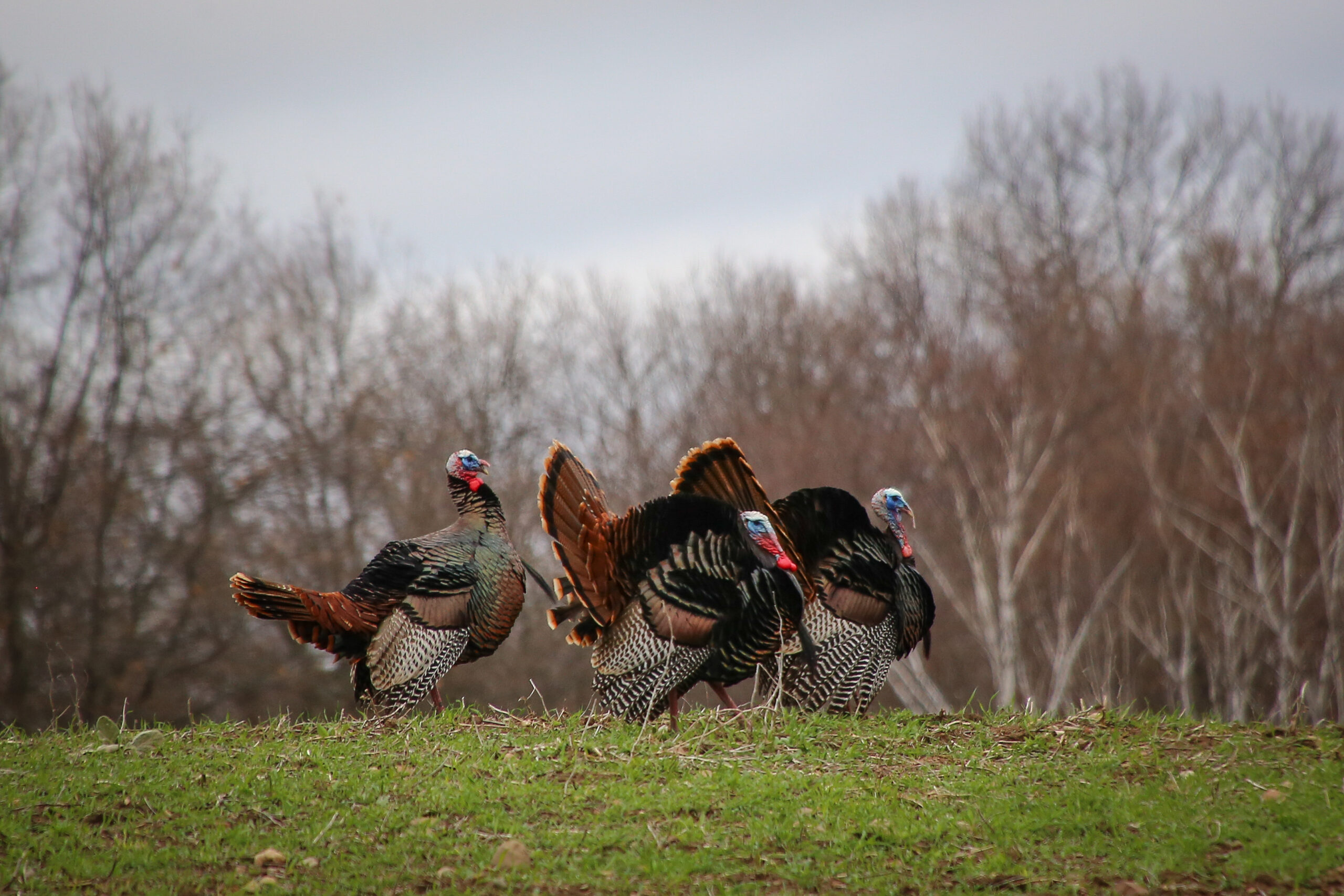
Image: An Eastern wild turkey struts on the edge of a spring woodland. Easterns are the most widespread subspecies – found in 49 states – and are known for their loud gobbles and wariness from hunting pressure.
When to Hunt: Early May to late May. Eastern turkeys are abundant and found in most states east of the Mississippi (and in many states west of it as well), with season dates that vary widely by region. If you’ve followed the plan of Osceola → Rio → Merriam’s, you’ll likely be targeting your Eastern in May, potentially even the latter half of May. This is ideal, as many Northern states (New England, Great Lakes, etc.) peak in mid-May and their seasons extend to the end of May or early June. You may also consider hunting an Eastern in April in a southern state if convenient – some hunters actually tag an Eastern before going out West, especially if it’s their home state bird and they want to get it done early. There’s no single correct approach, but ensure you have at least one Eastern hunt planned by May, plus a backup option if that first hunt doesn’t pan out.
Where to Hunt: Virtually anywhere east of the Great Plains – Easterns are the most widespread subspecies. They thrive in hardwood and mixed forests, agricultural mosaics, and swamps from the Deep South up through southern Canada. Key states known for Eastern turkey hunting include Missouri, Alabama, Pennsylvania, Kentucky, Tennessee, Georgia, Wisconsin, Michigan, New York, and New England states – among many others. Since an Eastern will likely be your final Slam bird, the choice often comes down to convenience and timing:
- If you live in an Eastern turkey state, that might be your closer. Your home state advantage (familiar land and cheaper resident tags) can play in your favor. As one budget-slam planner notes, “Your home state… should be the cheapest and most convenient” place to start or finish your slam. Hunting on home turf in May can save travel costs and allow you to be patient, hunting weekends or multiple days until you fill the tag.
- If you need a late-season option, look to the far North. States like Maine (season into early June), New Hampshire, Vermont, and Michigan have seasons that extend very late, offering an “insurance” hunt if you get delayed. Maine, for example, runs through the first week of June and has plenty of Easterns in its woods and fields. Just remember to secure any required license ahead of time (Maine and others sell permits OTC to non-residents, but check specific rules).
- Midwestern states (Missouri, Wisconsin, Ohio, etc.) often have excellent public land hunting for Easterns and seasons through May. Missouri is historically a top turkey state (with large tracts of Mark Twain National Forest and productive private lands if you have access). Wisconsin allows hunters to buy leftover permits for late season periods, which can be a great last-minute plan – and it has a lot of public land across the state. In fact, the onX team’s Jared Larsen capped off his single-season slam with a Wisconsin Eastern on May 20. He combined a family visit with the hunt, exemplifying how finishing the slam can happen near home. “For the past couple of years, my brother and I have done an annual turkey hunt [in Wisconsin]… It had been raining all day… I was in a pop-up blind… I pulled the trigger” and the final bird was down.
- Southern states (like Alabama, Mississippi, Georgia) open early (March/April) but also typically end earlier (by early May). If you started your slam late, you might miss these windows. However, if you want to front-load an Eastern, those states are options in late March or April. Keep in mind they’re also known for tough hunting due to many local hunters (Alabama and Mississippi Easterns are famously wary).
In summary, you have wide latitude in choosing an Eastern hunt. Prioritize a place you can be in May, with a good chance of relatively unpressured birds. Bob Humphrey suggests lining up multiple options: “Pick several destinations with good densities of un-pressured birds. And don’t put it off. Plan an early (hunt) to get it out of the way, but have a back-up late hunt in case things go wrong. Northern states where Easterns occur generally have the latest seasons”. This two-pronged strategy – an early attempt and a late backup – is wise if your schedule allows.
What to Expect & Tips: Easterns are often considered the wariest and most challenging turkey subspecies to hunt. They have the loudest, thunderous gobbles, but also a reputation for being tight-beaked once on the ground and cautious to calls. Part of this is due to hunting pressure: Easterns, being widespread, are heavily pursued by hunters each spring, and older toms have heard every hen yelp and box call squeal thrown at them. Don’t let that intimidate you, but do be ready for a more patient style of hunting if necessary. You might need to set up and go quiet, waiting for a bird to make the mistake of coming looking for you. In contrast to the roam-and-strike approach of Merriam’s, Eastern hunting (especially late season) can require a chess match mentality.
Habitat for Easterns can range from big hardwood forests (where running-and-gunning can work, covering ridges till you strike a gobble) to small pastures and fields (where blind hunting or carefully sneaking into position is effective). Adapt your tactics to the location: in timber, use the terrain to move close and call sparingly; in open areas, consider decoys and more aggressive calling to draw toms into range. Decoys can be hit or miss with pressured Easterns – some veteran gobblers will shy away from decoy setups late in season. Often a lone hen decoy or none at all (to make the tom seek the invisible hen) works best when turkeys have been hunted for weeks.
One challenge late in the season: hens may be nesting, which actually can work in your favor. A lone tom in May is desperate for companionship and might gobble hard at mid-morning or afternoon to attract any remaining hens. These lonely gobblers can be vulnerable if you can locate them. Use midday to cover ground with a crow call or cutt on a mouth call to elicit a shock gobble. Conversely, if hens are still around, you might need to target the tail end of the day when hens go to nest and toms are alone.
Regulations and etiquette are important: some Eastern states prohibit hunting past a certain hour (many Northeast states allow all-day hunting, but Southern states often cut off by 1 p.m. or sunset), and a few states don’t allow Sunday hunting on public land. Always check the state’s rules (shooting hours, bag limits, use of blinds or feeders, etc.) before heading out. As a traveling hunter, you must also be mindful of not unknowingly trespassing – property lines can be tricky in the East where public and private patchworks intermingle.
Finally, relish the moment. When that Eastern turkey comes in and you take the shot, you’ll complete your Grand Slam – a journey that likely spanned thousands of miles and every habitat from swamps to plains to mountains to farm fields. Take photos, tag your bird properly, and if you choose, you can register your Slam with NWTF for a certificate and pin (their online form and a $15 fee per bird is required, and you’ll need a witness signature for each harvest). But the true reward is the experience you’ve gained and the memories of four very different hunts coalescing into one grand achievement.
Logistics, Travel, and Gear Tips for a Slam Season
Pursuing a Grand Slam in one season is as much a logistical puzzle as it is a hunting challenge. You’ll be crisscrossing regions, navigating different state laws, climates, and maybe flying with firearms or driving long distances. Here are crucial travel and gear tips, straight from experts who have lived the “turkey road trip” life:
- Plan Tags and Permits Early: Research each state’s license requirements and season dates well ahead of time. Many states simply sell permits over-the-counter, but a few require applications or have limited quota tags. For example, Florida’s special WMA permits for Osceola hunts are typically due by fall of the previous year. Western states like Colorado and Wyoming have limited turkey draws in some areas, and states like South Dakota require you to apply (even for their general license) so that your tags can be mailed to you. Mark these deadlines on your calendar. A missed application could derail that portion of your Slam. It’s wise to prioritize securing the harder-to-get tags (Osceola-related permits, any limited-entry states) first, then fill in the OTC states around them. Also note odd rules: some states restrict hunting to certain hours or don’t allow Sunday hunting on public lands – knowing these nuances prevents surprises on the road.
- Group Your Hunts by Geography: Save time and money by combining nearby states or those on a natural route. If you can knock out two birds on one trip, do it. Pete Muller points out that several states host multiple subspecies, giving opportunistic Slam hunters a chance to double dip. Oklahoma and Kansas, for instance, each have Easterns in some parts and Rios in others. South Dakota uniquely has Merriam’s in the Black Hills and Easterns in the far east (with some hybrid Rios in between). Washington state even offers Eastern, Rio, and Merriam’s within its borders. While you only need one of each for the Slam, targeting a multi-subspecies state could provide a backup bird or just more hunting fun. As a strategy, you might plan a route like: Florida (Osceola), then hit South Dakota (tag a Merriam’s in the Hills and an Eastern/Rio on the prairies), then swing down to Nebraska or Kansas (Rio), etc. This way, you’re not zig-zagging unnecessarily. Neighboring states can also be paired: for example, hunt Merriam’s in Nebraska, then pop down to Kansas or Oklahoma for a Rio – minimal driving between those hunts.
- Travel Smart (Flights vs. Road): Time and budget will dictate if you drive the entire circuit or fly to some destinations. Many Slam chasers do a mix – maybe drive in a loop through the Plains and Midwest, but fly into Florida or out to the West to save days. If flying, remember you’ll be traveling with firearms. Book direct flights when possible to avoid layover complications with gun cases. Allow extra connection time if you must connect (1.5 hours is a safe minimum) so both you and your luggage (gun) make the plane. Always arrive early – get to your hunt location with at least a half-day to spare, in case of delays, and to scout or shake off travel fatigue. On the return, you might plan an evening flight so you can hunt one last morning if needed.
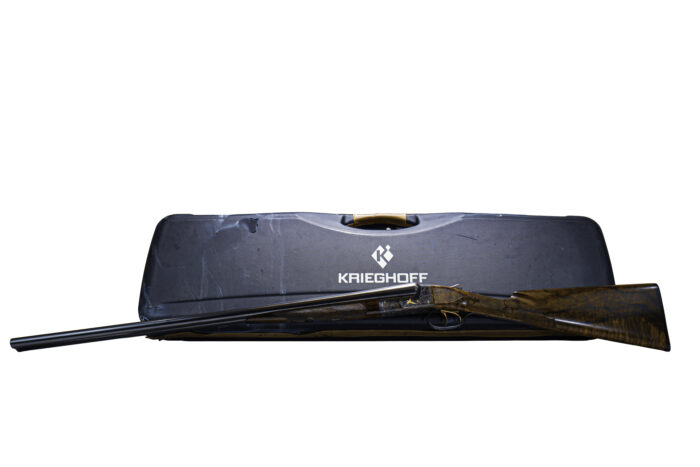
- Gun Care in Transit: Your shotgun is your primary tool – protect it. Baggage handlers and bumpy roads can be rough on gear, so invest in a quality hard case. “Once you see how baggage is handled you’ll understand why you need to invest in good quality cases,” writes veteran hunter Bobby Parks. For shotguns, a breakdown case (one that allows you to take off the barrel and pack the gun in a shorter, compact form) is highly recommended. It’s easier to fit in rental cars and to tote around airports, and a smaller case draws less unwanted attention. Double cases can be useful if traveling with a partner (one case for two guns) to save baggage fees. Negrini premium firearm cases are a popular choice here – they’re lightweight yet extremely durable Italian-made hard cases. In fact, Negrini’s breakdown shotgun cases are designed to meet all TSA and airline requirements for safe transport. They feature secure locks and protective interiors that will keep your turkey gun zeroed and unscathed through flights and drives. Whether it’s a Negrini or another brand, don’t skimp on your gun case; a busted optic or cracked stock from rough travel could end your Slam quest early. Mark your case with an ID tag and a distinctive ribbon or decal so it’s easy to spot on the carousel (and less likely to be picked up by someone else by mistake).
- Gear Up for Varied Conditions: One day you’re in a Florida swamp sweating in 90°F humidity, the next week you’re on a frosty Montana ridge at dawn. Pack for all conditions. Breathable camo layers, moisture-wicking base layers, and lightweight rain gear will cover most climates. For Western high elevations, bring a warm jacket and gloves for cold mornings. For southern swamps, have a thermacell or bug spray for mosquitoes. Good waterproof boots are needed in Florida; sturdier hiking boots for the Rockies. If you’re driving, you can throw a big tote of gear in the car with everything; if flying, plan a core set of clothing that can be layered. Don’t forget backup essentials: extra foam padding or moleskin for blisters (you’ll walk a lot), a basic first aid kit, and a cooler in your vehicle for meat if you’re successful (nothing worse than having to give away birds because you can’t keep them cool while traveling).
- Camping & Budget Tips: Doing a Grand Slam doesn’t have to bankrupt you. Many hunters complete slams on a shoestring by camping and cooking their own meals. “If you really want to cut costs, camp instead of crashing at a hotel… A lot of public lands have free or dirt-cheap camping,” notes one Mossy Oak article. Indeed, national forests and BLM lands often allow dispersed camping for free. Not only does this save money, it positions you closer to the hunt area. Also, consider packing food – protein bars for quick breakfast, and simple camp meals – to avoid restaurant costs and save time. The focus should be on hunting, not fine dining. Splurging on a hearty meal after filling the tag is far more satisfying anyway. If you do road trip, using a fuel-efficient vehicle or even a reliable car you can sleep in (SUV with fold-down seats) can slash costs. An example budget breakdown by an Oklahoma hunter tallied about $455 total in turkey license fees to hit Florida, Nebraska, Wisconsin, and his home state – the message: the real expenses are travel and lodging, so minimize those with smart planning.
- Safety and Health: Back-to-back hunts can be physically taxing. Make sure you’re in decent shape before embarking on this grand tour. Long drives can cause fatigue – swap drivers or take rest breaks. Stay hydrated, especially when changing climates (dry high elevations vs. humid lowlands). And keep communication open; let family or buddies know your itinerary and check in when possible, particularly if hunting remote areas alone.
- Enjoy the Journey: It’s easy to get caught up in the do-or-die mindset of completing the Slam, but remember to soak in the experience. Each region you visit has its own culture and scenery. You might be road-tripping across the country – take a little time to appreciate that sunrise on the prairie or the Spanish moss in a Florida oak hammock. Turkey hunting is about camaraderie and memories as much as about the kill. Bring a camera to document the different locales and subspecies. Maybe plan a celebratory stop after the final bird is down – you earned it.
Closing Thoughts
Completing a Grand Slam of wild turkeys in one season is a marathon of a journey – one that will test your hunting skill, perseverance, and organizational prowess. You’ll travel from palmetto swamps to cactus flats, from mountain timber to farm pastures, matching wits with four distinct types of gobblers. Along the way you’ll likely face setbacks: missed shots, bad weather, busted hunts by other hunters or stubborn birds. But as seasoned slam-chaser Kirsten Godfrey Duke says, “If you want it bad enough, you will find time” and make it happen. She suggests saving up a dedicated “splurge” fund and being ready to log serious miles – “We did so much driving, I did not see the same place twice,” she recalls of her coast-to-coast slam. Determination and passion fuel the Grand Slam quest.
In the end, whether you notch all four tags in one spring or simply lay the groundwork for future success, you’ll join a rare fraternity of hunters who have chased the Slam. As you stand over that final longbeard – be it a hard-won Eastern on a dewy May morning or another subspecies – take a moment to reflect on the accomplishment. You haven’t just collected trophies; you’ve experienced the incredible regional variety of American turkey hunting. Each fan and set of spurs tells a story of a place and time in this unforgettable season.
Now, proudly tag that bird and punch your final ticket. The Grand Slam road trip will leave you with stories to last a lifetime and a deep respect for the resilience of the wild turkey. Few hunting achievements compare. As the turkey woods fall silent with the approach of summer, you can savor the satisfaction of a mission completed. And who knows – maybe you’ll start daydreaming of a Royal Slam (adding the Gould’s turkey) or even the far-flung World Slam someday. For now, you’ve conquered the Grand Slam in one season, a true pinnacle of the sport. Congratulations and happy hunting!
Sources:
- Humphrey, Bob. “Hunting: Planning Your Grand Slam.” Portland Press Herald, 12 Jan. 2020
pressherald.com. - Humphrey, Bob. “Planning Your Turkey Slam.” Mossy Oak, 21 Feb. 2018
mossyoak.com. - Muller, Pete. “How to Plan a NWTF Wild Turkey Grand Slam.” American Hunter (NRA), 28 Mar. 2018
americanhunter.org. - Breuer, Matthew. “Chasing the Grand Slam.” NWTF, 25 Aug. 2021
nwtf.org. - Larsen, Jared. “Turkey Grand Slam and How to Get One.” onX Hunt Blog, 6 Mar. 2025
onxmaps.com. - Duke, Kirsten G. “Road Trip Tips for a Single-Season Grand Slam.” Realtree Turkey Blog, 19 Feb. 2021
realtree.com. - “Doing a Single Season Grand Slam on a Budget.” Mossy Oak, 2020
mossyoak.com.
- Parks, Bobby. “Turkey Hunting – Travel Hunting Tips.” Grand Slam Network, 31 Jan. 2013