




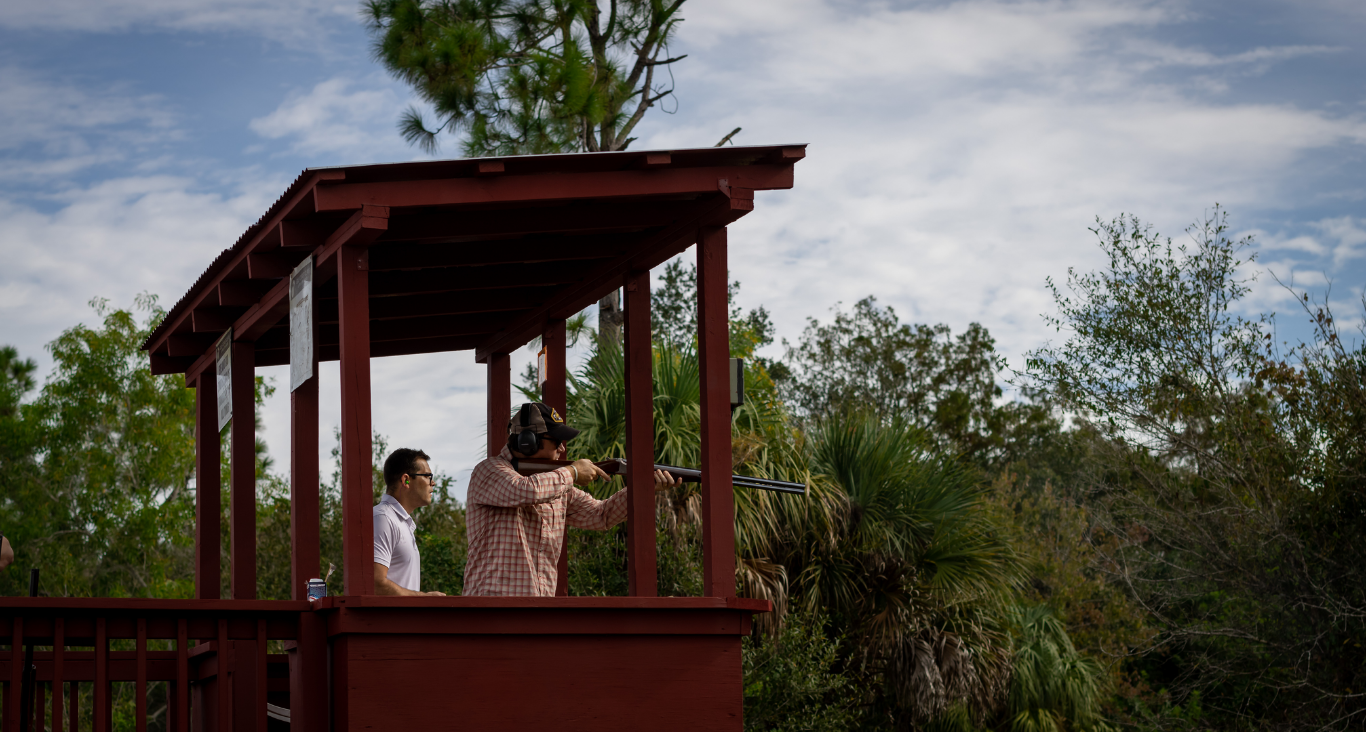
Shotgun ballistics are often discussed in terms of shot size, choke selection, and lead adjustments, but one of the most overlooked variables in competitive clay shooting is altitude. Whether you’re shooting at sea level in Florida or 7,000 feet above ground in Colorado, elevation can have a measurable impact on how shot pellets behave, how targets appear to move, and how shooters physically respond to changing oxygen levels.
Understanding how altitude affects shot patterning, target speed perception, and shooter reaction time is critical for serious competitors who want to perform consistently in sporting clays, FITASC, trap, and skeet competitions held in different regions.
This article takes an advanced, science-backed look at how elevation influences performance and how shooters can adjust their approach to maintain accuracy and consistency in high- and low-altitude conditions.
The Science Behind Elevation & Air Density in Shotgun Ballistics
At higher elevations, air density decreases because there is less atmospheric pressure compressing the air molecules. This has a direct impact on how shot pellets behave once they leave the muzzle.
- Lower air density at high altitude means less resistance on shot pellets. The result? Pellets retain velocity longer and spread out slightly less than they do at sea level.
- Conversely, at lower elevations, the denser air creates more drag, causing pellets to slow down faster and potentially widening the shot pattern.
How Altitude Affects Pellet Travel & Patterning
According to ballistics research from the National Shooting Sports Foundation (NSSF), when shooting at 5,000 feet above sea level compared to sea level, shot velocity is retained for a longer distance. This means:
✔ At high elevations, shooters may see tighter patterns at longer ranges because the pellets experience less friction in the thinner air.
✔ At sea level, patterns may open up slightly faster as the denser air slows the shot string more quickly.
✔ At high altitude, longer target distances may require slight adjustments in lead to compensate for increased pellet speed retention.
How Elevation Affects Target Speed Perception
Beyond changes in pellet behavior, altitude also alters how the shooter perceives the speed and movement of clay targets.
At higher altitudes, the same target presentations may feel slightly slower than at sea level. Why? The key factors are:
✔ Reduced air resistance on the clay itself. Less drag means that the target retains momentum slightly longer.
✔ Perceptual differences caused by clearer visibility. Higher-altitude locations tend to have less atmospheric haze, giving shooters a clearer view of targets at distance. This can make them appear to be moving slower, even if their actual speed is unchanged.
Why This Matters in Competition
Shooters transitioning from a low-altitude training environment to a high-altitude competition may initially feel that:
- Targets seem slower than expected, leading to premature trigger pulls.
- Quartering or crossing birds require minor lead adjustments because they retain speed longer.
- Long-range targets may feel deceptively easier due to improved visibility, but the shooter still needs to adjust for the difference in air resistance affecting shot patterning.
Shooter Physiology: How Elevation Affects Reaction Time & Fatigue
It’s not just the shotgun and the target that are affected by elevation—it’s also the shooter.
At higher elevations, the lower oxygen levels can impact:
✔ Reaction speed – Oxygen depletion at altitudes above 5,000 feet can lead to slower cognitive processing, affecting reaction time when tracking targets.
✔ Fatigue levels – Shooters not acclimated to altitude may experience muscle fatigue faster, which can affect mount stability and gun movement.
✔ Breathing control – Less oxygen means higher respiratory rates, potentially disrupting focus and shooting rhythm.
Competitive Example: The Impact of High Altitude on Elite Shooters
Scientific studies on altitude adaptation in athletes indicate that performance can be affected as early as 4,000 feet above sea level, with more pronounced effects above 7,000 feet (Wilber 57).
At major shotgun events held at high-altitude ranges—such as in Colorado or Wyoming—shooters who do not train in similar conditions may experience:
✔ Delayed reaction time due to minor cognitive slowing
✔ Increased physical strain over multiple rounds of shooting
✔ Difficulty maintaining shooting form due to fatigue
Professional shooters who compete in high-altitude environments often arrive several days early to acclimate and adjust their breathing and reaction timing.
Adjusting Your Shot Strategy for Different Elevations
1. Pattern Your Gun at the Elevation You Will Be Competing In
If possible, conduct patterning tests at the actual altitude of the competition. Because air density affects pellet spread, verifying your choke and load combination at competition altitude ensures you know what to expect.
✔ At high altitudes, consider using a slightly more open choke to account for the naturally tighter pattern.
✔ At low altitudes, if patterns are spreading faster, a tighter choke may help maintain control.
2. Make Minor Lead Adjustments for Long-Range Targets
✔ In high-altitude conditions, expect pellets to maintain energy longer, meaning less forward allowance may be needed on longer targets.
✔ In sea-level conditions, increased air resistance may require slightly more lead than usual on crossers and quartering birds.
3. Train for Physiological Adjustments
If competing at an altitude significantly higher than your home training ground, consider:
✔ Arriving at least 48 hours early to acclimate to oxygen levels.
✔ Maintaining proper hydration, as high-altitude environments tend to be drier and can increase fatigue.
✔ Adjusting breathing technique—taking deep, controlled breaths before calling for the target can help regulate oxygen flow and stabilize focus.
Why Understanding Elevation Gives You a Competitive Advantage
Many shooters overlook the impact of altitude and air density on shot behavior, target speed, and reaction time. However, those who adapt their training and competition approach for varying elevations will always have an edge over those who simply rely on their standard shot process.
By understanding how thinner air affects shot patterning and target perception, serious competitors can fine-tune their approach for each new region they compete in.
✔ If you’re heading to a high-altitude event, prepare for improved shot retention and minor adjustments in lead.
✔ If competing at sea level, anticipate slightly wider patterns and ensure proper forward allowance on crossing targets.
The most successful shooters take every environmental variable into account. Whether you’re competing at sea level or 7,000 feet up, understanding and adapting to elevation will make you a more precise, confident shooter in any conditions.
References
- National Shooting Sports Foundation (NSSF). Shotgun Ballistics & Air Density Effects on Performance. NSSF, 2021.
- Wilber, Randall L. Altitude Training & Athletic Performance. Human Kinetics, 2007.
- Zelinsky, Gregory J., and Jeffrey M. Bisley. “The Role of Overt Attention in Target Acquisition.” Psychological Science, vol. 32, no. 4, 2021, pp. 567–582.