




Full credit for this informative blog post goes to A Break In The Action podcast hosted by Ryan Doughty. If you want to listen to the episode that inspired this blog post you can find it at the bottom of this page. Also, please be sure to subscribe to this great podcast, we highly recommend it.
For shooting enthusiasts and hunters, air travel with a firearm can seem complicated. However, with the right knowledge and preparation, you can transport your shotgun safely and legally. This guide, based on expert advice from TSA professionals and gear specialists featured on the A Break in the Action podcast, outlines the essential steps to flying with a shotgun in compliance with TSA regulations and best practices for protecting your firearm.
Choosing the Right Firearm for Travel:
When flying with a shotgun, it’s essential to choose the right firearm for travel. While it may be tempting to pack your most valuable gun, Doughty warns that this could lead to issues if it’s lost or damaged. “Insurance can only compensate you for the loss of your dad’s vintage Purdey, but it won’t be able to bring it back,” Doughty explains. For highly valuable or irreplaceable guns, it’s often safer to leave them at home for local hunts. There are several excellent options for insuring your firearm, so looking into policy options is not a bad idea.
The TSA Process: Preparing Your Shotgun for Air Travel
Flying with a shotgun involves adhering to strict TSA rules, and it’s important to be well-prepared. Rick Miller, a Transportation Security Inspector at Indianapolis International Airport, explains the process: “It’s a very simple process. The firearm must be unloaded, it must be in a locked, hard-sided container, and it must be declared at the ticket counter,” Miller says.
According to the TSA, Traveling with Firearms requires that passengers store their unloaded guns in hard-sided cases with locks. It’s vital that you know and follow these guidelines to avoid any trouble at the airport.
Key TSA Rules to Remember:
- Your shotgun must be unloaded.
- It needs to be stored in a locked, hard-sided case.
- Declare it at the check-in counter, never at security.
The Importance of a Quality Gun Case:
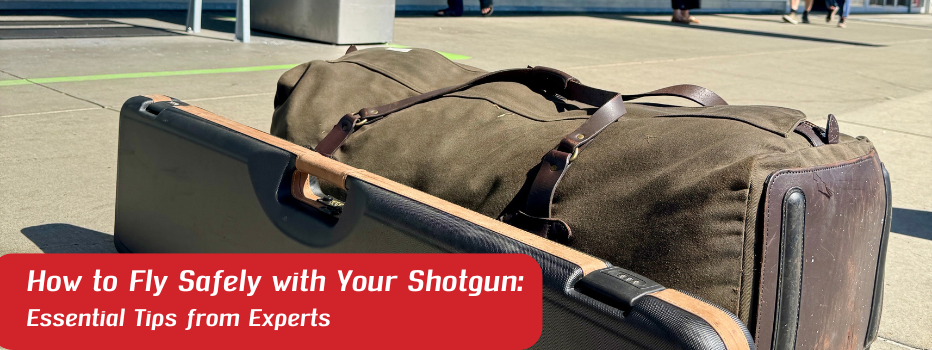
Selecting the right gun case is crucial to protecting your shotgun during air travel. Host Ryan Doughty suggests using Negrini cases because of their lightweight design and durability:
“I guarantee that once you check your shotgun at the airport, no one will treat it with as much care as you do,” Doughty explains. “Negrini cases are just as strong as a Pelican, but at 65% of the weight, making them ideal for travel.”
John Redout, VP of Operations at Negrini, shared insights on the unique features of their cases:
“Negrini cases are designed using crash-test bumper technology. They’re ultra-light but rugged, and they absorb shocks from handling during transport,” Redout says.
Key Features to Look for in a Gun Case:
- Lightweight construction (Negrini cases are 65% lighter than aluminum cases).
- Durable double-wall design for shock absorption.
- TSA-compliant integrated locks.
Packing and Checking Your Shotgun:
When checking your firearm, follow these steps to ensure a smooth process:
- Ensure your shotgun is unloaded. Remove any magazines or shells.
- Pack it in a hard-sided, locked case.
- Fill out the firearm declaration form at check-in and insert it into the case.
- Add padding inside the case to prevent your gun from moving during transport. John Redout advises using foam blocks to block any movement.
Rick Miller also emphasized the importance of securing the firearm inside the case:
“The firearm should be securely locked inside the case so it can’t be easily accessed or moved,” Miller adds.
Make sure to review TSA’s guidelines on transporting firearms and ammunition before heading to the airport to avoid any issues.
Additional Tips for International Travel:
If you’re traveling internationally with your shotgun, there are additional requirements depending on the country. Doughty offers this advice for trips abroad:
“For the UK, you need to apply for a visitor’s firearm permit at least six weeks before you travel. A local sponsor will submit the application on your behalf,” Doughty explains.
In countries like Spain and Argentina, you’ll need to visit the nearest consulate for a permit, which must be translated into Spanish. “This process is time-consuming but necessary to ensure you’re legally carrying your firearm,” Doughty advises.
For more information on the requirements for flying internationally with firearms, it’s important to check each country’s specific regulations. U.S. Customs and Border Protection also has a helpful resource on completing the required Form 4457 for U.S. citizens before traveling internationally.
Conclusion:
Air travel with a shotgun doesn’t need to be stressful if you follow expert advice. By choosing the right firearm, following TSA regulations, using a high-quality gun case, and preparing for international travel requirements, you can ensure a smooth, worry-free journey.