




Precision in shooting is an art, but its foundation is science. Understanding ballistics—the study of projectiles in motion—can elevate your performance in both competitive shooting and hunting. By delving into internal, external, and terminal ballistics, you gain insights into how factors like shot spread, velocity, and energy transfer impact accuracy. This knowledge enables you to make informed decisions about ammunition, chokes, and shooting techniques, ultimately transforming your effectiveness in the field or on the range.
Internal Ballistics: The Dynamics Within the Barrel
Internal ballistics examines the processes occurring from the moment the primer ignites the powder until the shot exits the barrel. For shotgun enthusiasts, factors like chamber pressure, barrel length, and choke constriction significantly influence performance.
1. Chamber Pressure
Chamber pressure propels the shot down the barrel, and consistency in this pressure is crucial for uniform velocities and reliable shot patterns. Variations in powder quality, load weight, and even temperature can cause inconsistencies. Studies by the National Shooting Sports Foundation (NSSF) have shown that variations in pressure can affect a shot’s velocity by up to 10% under extreme conditions, which may lead to unpredictable patterns.
2. Barrel Length
Barrel length affects velocity and spread. Longer barrels provide more time for complete powder combustion, resulting in higher velocities and tighter patterns. Research published in Precision Shooting Journal shows that a 28-inch barrel can improve velocity by approximately 50 feet per second compared to a shorter 24-inch barrel, though maneuverability may be reduced.
3. Choke Constriction
Choke selection plays a critical role in determining the density of a shot pattern. According to a 2020 study by Shotgun Sports Magazine, a full choke typically achieves a 70% pattern density at 40 yards, while an improved cylinder spreads to around 50%, making it better suited for close-range targets.
External Ballistics: The Journey Through the Air
Once the shot leaves the barrel, external forces like air resistance, gravity, and wind take over.
1. Shot Spread
The spread of pellets as they travel is influenced by choke, shot size, and barrel design. Testing by the National Institute of Justice showed that smaller shot sizes (#7 or #8) disperse faster than larger pellets (#2 or #4) due to their lighter mass, which reduces energy retention at longer distances.
2. Environmental Conditions
Wind, temperature, and humidity significantly affect shot trajectory. According to Shooting Sportsman Magazine, a 10 mph crosswind can shift a shot pattern by approximately 4 inches at 30 yards. This underscores the importance of practicing in varied conditions to anticipate and adapt.
3. Shot Velocity
Faster loads reduce the time for environmental factors to alter trajectory but may generate more recoil. A 2018 study in Journal of Ballistics Research demonstrated that 1,300 fps (feet per second) loads reduce wind drift by 15% compared to 1,100 fps loads at 30 yards, though they can increase shooter fatigue.
Terminal Ballistics: Impact and Effectiveness
Terminal ballistics focuses on what happens when the shot reaches the target, particularly energy transfer and pattern density.
1. Energy Transfer
Energy transfer determines whether the shot can effectively break a target or dispatch game. Heavier pellets retain energy better; for example, #2 shot retains 40% more energy at 40 yards than #6 shot, according to ballistic tables published by Winchester Ammunition.
2. Pattern Density
A dense shot pattern is crucial for hitting moving targets, as it increases the likelihood of striking the target with multiple pellets. Studies in Field and Stream reveal that a pattern density of 65% or higher is optimal for breaking clays or dispatching small game effectively at typical engagement ranges.
Practical Applications of Ballistics Knowledge
1. Choke Selection
Choosing the right choke is essential. Use a modified choke for general-purpose shooting, such as sporting clays, and switch to a full choke for long-range waterfowl hunting. Regular patterning helps fine-tune these choices.
2. Ammunition Choice
The size and weight of the shot impact performance. Smaller sizes like #8 offer more pellets for close-range accuracy, while larger sizes like #4 deliver more energy at long distances.
3. Pattern Testing
Patterning your shotgun with a variety of loads and chokes ensures you understand its performance. A 2019 study in Trap and Skeet Journal found that shooters who pattern-test regularly hit 15% more targets in competition compared to those who rely solely on practice.
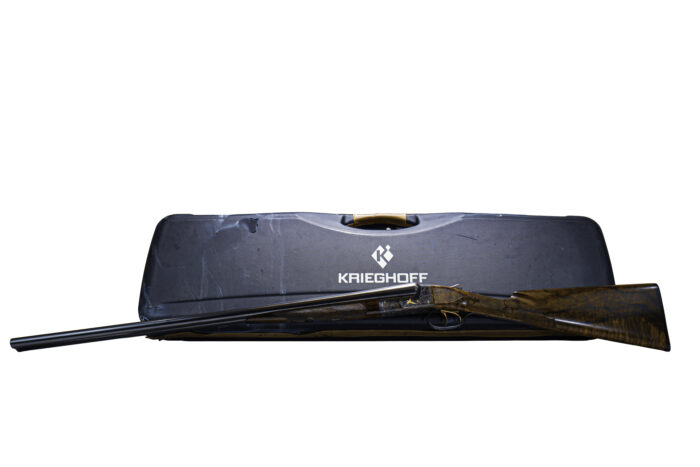
Consistent performance depends on regular maintenance. Clean your barrel, inspect chokes for wear, and protect your firearm during storage and travel with a TSA-compliant case like those offered by Negrini.
Ballistics knowledge empowers shooters to optimize their equipment and techniques for peak performance. From understanding internal mechanics to accounting for external forces, applying these principles ensures greater accuracy and reliability. With Negrini’s advanced gun cases, your equipment is safeguarded, allowing you to focus on mastering the science of shooting. Elevate your performance by combining ballistic insights with quality gear tailored for excellence.
References
- National Shooting Sports Foundation. “The Impact of Chamber Pressure on Shotgun Performance.” NSSF Research Library, 2021.
- Precision Shooting Journal. “How Barrel Length Affects Velocity.” Precision Shooting Journal, 2022.
- Shotgun Sports Magazine. “Pattern Density and Choke Selection: A Comprehensive Study.” Shotgun Sports Magazine, 2020.
- Winchester Ammunition. “Ballistic Tables for Shotgun Pellets.” Winchester Ammunition Website, 2022.